This is just a random post featuring five random videos that I've listed under "favourites" in my YouTube account.
Showing posts with label sex. Show all posts
Showing posts with label sex. Show all posts
Saturday, 2 May 2015


Sunday, 20 April 2014
I love words -- including the Korean word for love
 |
| Image Source: Korea Rainbow Alliance |
The National Institute of the Korean Language has been pressured to change the definition of love "사랑" into something that can only occur between people of the opposite sex. This is simply ridiculous. Love cannot be limited to heterosexual romantic love only. The Korean word "sarang", like the English word "love", is an inclusive word. One can sarang your lover, yes, but you also sarang your parents and your friends and your children and your pets. I'm signing and supporting this petition not only because I support the rights of sexual minorities, but also because I sarang words.
If you feel like supporting this cause, you can sign the petition at Avaaz.
Monday, 8 July 2013
Vreemde lukraak gedagtes oor totties
 |
| Image Source |
Ouers praat ook soms eufemisties met hulle seuntjies oor hulle voëltjies. Die bekendste Afrikaanse eufemisme wat kinders geleer word is sekerlik tollie. 'n Snaakse eufemisme, dink ek, want 'n tollie is tog 'n bul-kalfie. Is dit Afrikaans se boere-wortels wat hier te sprake is? Maar hoekom praat ons nie van meisies se geslagdeel as versies nie? Ons verwys allermins van 'n onaangename volwasse vrou as 'n koei. Betreffende metaforiese eufemismes en kindertotties het ek nog altyd gedink Antjie Krog se beskrywing in 'n gedig van haar babaseuntjie se penissie en skrotumpie as 'n slakkie my sy skulpie is mooi beskrywend. In Korea word rooirissie (“ghôtjoe”) as eufemisme gebruik. Op 'n visuele vlak is vrugte en groente sekerlik heel gepas, dink byvoorbeeld aan piesangs, komkommers en wortels, maar ek dink nie dat mense in Afrikaans juis na hierdie kosse verwys met konneksie tot die penis nie. Ook nie juis in Engels nie. Ek wonder of ander kulture, soos in die geval van Korea, kosse as eufemismes gebruik.
As jong man het ek begin dink dat dit dalk nie toevallig is dat piel en siel so 'n sterk rymingspaar maak nie, en het al selfs 'n gedig geskryf wat die konneksie uitlig. Dis dalk iets wat vroue sal verbygaan, maar dis onbetwisbaar dat daar by mans 'n baie sterk band is tussen hulle penisse en die kern van hulle wese. Daar is 'n archetipiese simboliek aan 'n penis wat ons in alle kulture regoor die aarde vind. So oppervlakkig as dit mag klink is daar min dinge wat 'n man so manlik kan laat voel as 'n sterk ereksie. Dis 'n primitiewe, tog onbetwisbare, werklikheid.
 |
| Image Source |
Die konneksie tussen 'n penis en 'n wapen ('n tradisioneel manlike instrument) is byna voor die handliggend. Dit voel byna soos een-twee-drie om die sinaptiese spronge te maak tussen mans, penisse en wapens, en daarom is daar 'n hele swetterjoel wapens wat as metafore vir penisse gebruik word: knopkiere, spies, swaard, pistool, misiel, atoombom. Aai, ou Freud.
Dit is seker nie te verassend nie dat mans partykeer vir hulle penisse name gee. Persoonlik het ek nie 'n troetelnaam vir my “meneer” nie, maar op 'n keer het ek tot my eie verbasing vir iemand gewaarsku: “Don't wake the dragon!”
So wat vir 'n ding is 'n “tottie”? Is dit ook 'n metaforiese eufamisme? Ek benodig duidelik 'n Afrikaanse etomologiese woordeboek. Die Afrikaanse sakwoordeboekie wat ek hier in Korea het lys nie die woord nie, en my elektroniese kopie van die HAT (e-HAT, 5de uitgawe) werk nie op Windows 7 nie, gevolglik kan ek nie die etomologie van “tottie” opsoek nie. Miskien weet een van die lesers waar die snaakse woordjie vandaan kom. Dis moontlik 'n speling op die woord “tietie”; 'n vermanliking daarvan. Sou 'n mens dan kan praat van 'n volwasse man se “tot”? Ek dink nie meeste mans sal daarvan hou nie. “Tot” klink so kort . . . te verknot, te bot, te stomp. Dis gepas dat 'n seuntjie 'n “tottie” kan hê, maar 'n man soek 'n kragtige naam vir sy swaard. Watter kryger sal die oorlog in jaag met sy swaard “Tot”? Nee, Arthur het Excalibur, Beowolf het Hrunting, Charlemane het Joyeuse, Gandalf het Glamdring, en Harry Potter het die Swaard van Gryffindor.
 |
| 'n Thai-man met fallus-gelukbringers. Image Source |
Ek is duidelik besig om te prokrastineer. Het werk om te doen, maar is nie lus nie, so nou skryf ek opstelle oor ganskoppe.
Friday, 19 April 2013
About Women's Beauty and the Absence of Manhood
Dove has a new video that is going viral at the moment. It is about women's flawed self-perceptions and how they tend to perceive themselves in a negative light in comparison to how other's see them.
I liked the video -- but then the person who sent it to me, also sent me a link to a blogger's analysis of the video. The blogger made some piercing observations and highlighted a big problem with modern expectations of beauty. I highly recommend you watch the video and read the blogger's post.
The post made me think of one of my favourite essays which I do in one of my classes every year. It is by Susan Sontag and about the problem of beauty--how it is both a power source for women, but also a way of negating power from women--a way to always make them the fairer, and by implication, the weaker sex. Anyone interested in gender equality and parents concerned about the values they teach their daughters will find value in reading Sontag's "Women's Beauty: Put-Down or Power Source?" (No copyright infringement is intended with the sharing of this link.)
This then made me think of something else I read recently regarding men. While women in the modern Western world have seized the gender equality they deserve, men have in a sense abdicated their role as men. Young men, it seems, get stuck in a state of pre-adulthood: neither adolescent, nor adult; unwilling to grow up and take up the responsibilities of manhood, leaving the question: "Where Have All the Good Men Gone?" The article is a very interesting read.
I think part of the problem is the lack of fathers, mentors, and role-models. In years gone by, sons used to learn a family trade. This close working relationship between father and son was a way to nurture the boy into adulthood. "Masculinity is bestowed," as John Eldredge so famously said in his book Wild at Heart: Discovering the Secret of a Man's Soul. A boy becomes a man through the guidance of his father (or a father figure). The problem is, however, that father's are generally absent; they may be workaholics--as my father was--or just plain missing, and the boy has to stumble his way towards adulthood without the guidance he needs. Sure he becomes an adult, but does he truly become a man? I wrote about my personal journey in adulthood and manhood some years back. It is still a topic I find fascinating.
I've watched the first season of Kitchen Nightmares recently and a common theme that I noticed was how these men (often the problems in the restaurants featured in the series involved a man not manning up to responsibility) really just needed someone who can tell him to get his act together, but also tell him that he has faith in him, that he can make it. In other words, these men just needed an involved and encouraging father (-figure). I wonder how much of the world's problems are centered in this very issue: absent, uninvolved fathers?
Even though there is still room for progress, there have been many good changes towards gender equality. At the same time, however, the genders have also lost much of their innate respective value, and it seems to be at a cost.
I liked the video -- but then the person who sent it to me, also sent me a link to a blogger's analysis of the video. The blogger made some piercing observations and highlighted a big problem with modern expectations of beauty. I highly recommend you watch the video and read the blogger's post.
The post made me think of one of my favourite essays which I do in one of my classes every year. It is by Susan Sontag and about the problem of beauty--how it is both a power source for women, but also a way of negating power from women--a way to always make them the fairer, and by implication, the weaker sex. Anyone interested in gender equality and parents concerned about the values they teach their daughters will find value in reading Sontag's "Women's Beauty: Put-Down or Power Source?" (No copyright infringement is intended with the sharing of this link.)
This then made me think of something else I read recently regarding men. While women in the modern Western world have seized the gender equality they deserve, men have in a sense abdicated their role as men. Young men, it seems, get stuck in a state of pre-adulthood: neither adolescent, nor adult; unwilling to grow up and take up the responsibilities of manhood, leaving the question: "Where Have All the Good Men Gone?" The article is a very interesting read.
I think part of the problem is the lack of fathers, mentors, and role-models. In years gone by, sons used to learn a family trade. This close working relationship between father and son was a way to nurture the boy into adulthood. "Masculinity is bestowed," as John Eldredge so famously said in his book Wild at Heart: Discovering the Secret of a Man's Soul. A boy becomes a man through the guidance of his father (or a father figure). The problem is, however, that father's are generally absent; they may be workaholics--as my father was--or just plain missing, and the boy has to stumble his way towards adulthood without the guidance he needs. Sure he becomes an adult, but does he truly become a man? I wrote about my personal journey in adulthood and manhood some years back. It is still a topic I find fascinating.
I've watched the first season of Kitchen Nightmares recently and a common theme that I noticed was how these men (often the problems in the restaurants featured in the series involved a man not manning up to responsibility) really just needed someone who can tell him to get his act together, but also tell him that he has faith in him, that he can make it. In other words, these men just needed an involved and encouraging father (-figure). I wonder how much of the world's problems are centered in this very issue: absent, uninvolved fathers?
Even though there is still room for progress, there have been many good changes towards gender equality. At the same time, however, the genders have also lost much of their innate respective value, and it seems to be at a cost.
Monday, 13 August 2012
The Taming of Smeagol
 |
| "The Taming of Smeagol" by Donato Giancola |
I stumbled onto this absolutely exquisite painting, depicting a scene from J. R. R. Tolkien's The Lord of the Rings. It is by multiple award winning artist Donato Giancola. The title "The Taming of Smeagol" refers to a chapter from the second novel of The Lord of the Rings trilogy, "The Two Towers", in which Frodo and Sam captures Smeagol (Gollum).
 |
| A scene from a staged production of Shakespeare's "The Taming of the Shrew", directed by Conall Morrisson (2008). (Image Source) |
Tolkien's chapter title "The Taming of Smeagol" alludes to Shakespeare's play "The Taming of the Shrew" in which a gentlemen "tames" his stubborn bride into becoming obedient. The "taming" in The Lord of the Rings is summarised as follows on the Tolkien Gateway wiki:
As the hobbits huddle in the cold, Frodo spots a crawling insect-like creature on a distant cliff, clinging to the wall by its hands. Sam realizes the creature is Gollum. As the creature draws nearer, he leaps on Sam. They wrestle. Frodo draws his knife Sting from its sheath and thrusts it against Gollum’s neck, demanding obedience from the creature. Gollum is suddenly subservient and vows total servitude, but Frodo does not trust him entirely. Gollum suddenly bounds away, attempting escape. The hobbits get him back and harness him with the Elf rope, which causes Gollum great pain. Gollum again vows obedience, and this time he seems sincere. The creature leads his Hobbit masters onward to Mordor.
Many readers, particularly readers of later generations, have wondered if the relationship between the Hobbits Frodo and Sam are possibly homosexual, considering the strong love the Hobbits have for each other and the physical affection that Sam shows towards his master Frodo. I think this misconception reveals the sad state of modern Western culture where any intimate friendship is assumed to be sexual. As if the only way to intimacy is through sex. No, any close reading of the text makes it clear that the two Hobbits are not homosexual. They do, however, express great camaraderie and platonic intimacy and such physical affection between same-sex friends are quite common in many cultures around the world and carries no sexual significance--not in many parts of our world, nor in Tolkien's Middle Earth.
The painting by Giancolo, on the other hand, flips the tables and asks a different question; not if there is sexual intimacy between Frodo and Sam, but rather if there is a type of sexual tension between Frodo and Smeagol, or Sam and Smeagol.
|
| "The Taming of Smeagol" by Donato Giancola |
The homo-erotic elements in this painting is glaringly obvious. The naked Smeagol sits on Sam's back; Smeagol has toppled Sam and mounted him, hinting at an attempted rape. Fortunately Frodo intervenes and pulls Smeagol away by his hair, while keeping "Sting", his sword threateningly close. Frodo's violent action is paradoxically contrasted with his face so intimately close to Smeagol's that it almost appears like Frodo is about to kiss Smeagol. Furthermore, swords are by their very nature phallic symbols and in this painting with its close proximity to the naked Smeagol, the sexual symbolism is obviously alluded to.
Giancolo's depiction evokes a lover's triangle. Those that have read the book (or seen the movie) will know that an actual lover's triangle between these three characters do not exist. Yet the painting makes us aware of such a possibility nonetheless and we are forced to rethink the relationship of these characters. And so we do find a lover's triangle of sorts--not of Frodo and Sam and Smeagol, but of Frodo and Smeagol and the Ring. Smeagol's obsession with the Ring, his "precious", is stronger than any normal erotic obsession. Smeagol's seeming attempt to get closer to Frodo, i.e. Smeagol's "taming", is based on his obsession with the Ring. While Frodo finds the Ring burdensome, he also becomes infatuated with it, and because he knows that Smeagol understands this infatuation, he feels a special bond with Smeagol. The Ring draws them both to itself, but also strangely to each other. Sam is the one left out, the one "underneath", separated from Frodo and Smeagol's special intimacy. Notice how the menacing sword points at Sam, showing how he is "threatened" by Frodo and Smeagol's connection.
Giancolo's homo-erotic interpretation highlights the intensity of the Ring's power--brilliantly comparing it to an erotic obsession.
You can view more of Giancolo's artwork at his website.
Saturday, 31 March 2012
Bene

Bene of borste? Die ding wat jou maak vergeet waarvan jy jou net gepraat het en (ongeskik, maar onskuldig) staar. Party mans is gaande oor borste, ander oor bene. Ek is 'n beneman.
In Korea sien 'n mens nogals baie bene. Koreaanse vroue het nie juis borste nie, daarom paradeur hulle hulle bene. Een van die vreemdste dinge van Korea is hoedat jongvroue, veral in die winter, hulle bene wys. Terwyl gewone mense alle vleeslike opening toe maak teen die bibberkoue, loop vele Koreaanse vroue rond in “hot pants.” Wyl ek ten minste twee lae broeke aan het, vergaap ek myself oor Koreaanse meisies in minirompe. Ek wens die “vergaping” was 'n waardeuring vir hulle bene, eerder as 'n verstomming oor hulle bomenslike (waansinnige?) vermoë om die koue te weerstaan. Then again, I am from Africa. Van my studente meen dat vroue wat so met kaalbene in die winter loop doen dit om gewig te verloor. Glo brand jy baie kilojoules deur jou bene in die koue te ontbloot.
Dis baie jammer dat tipiese Koreaanse meisies se bene dit net nie vir my doen nie. 'n Mooi been moet 'n kurwe hê, glo ek. Die kuite moet 'n kontoer hê wat herhaal in die enkels—'n eggo van die middel en heupe. Die Koreaanse ideaal vind nie vroue met kuite aantreklik nie. Kuite is waarskynlik 'n historiese simbool van harde-arbeid. Die mooi vrou in Korea is gebasseer op die aristokrasie, bleek vroutjies wat deur hulle diensmeisies gepamperlang is: spierlose porselynpoppies. Tipiese Koreaanse meisies het kontoerlose bene, sulke omgekeerde "cones" wat in skoene verdwyn. Selfs Korea se mode-gurus kritiseer hulle celebrities indien hulle bene elegante kontoere het. Kyk hierdie ontstellende YouTube-video waarin meisies met mynsinsiens pragtige bene eufemisties afgekraak word oor hulle "healthy legs".
Toe ek vroeër vanjaar in Suid-Afrika was, het iets my opgeval—mooi bene. Ek het al vergeet hoe mooi bene kan wees en dit was lekker om soveel meisies met gesonde, mooi bene te sien.
 |
| Famke Jannsen is 'n Nederlandse model en aktrise. Sy is 1,82 m lank, langer as meeste Amerikaners waar sy in Hollywood werk. |
In Korea is daardie tipe bene geensins die gekose bene nie. Hier in Korea is daar snaakse dinge van Suid-Afrika wat ek mis en nie mis nie. Ek mis nie braaivleis nie. Ek mis nie rugby nie. Ek mis bene wat my hart aan die jaag kry!
* Ondanks my Skots-Joodse herkoms, was ek in 'n plaasskool as kind en in 'n Afrikaanse hoërskool. My bewuswondering van mooi meisies is dus vanuit hierdie konteks.
Friday, 16 December 2011
Aegyo: Korea's Cute Coquette
In Korea there is something called "aegyo". They translate it as charming, which is definitely not the best translation. Aegyo is basically when an adult acts childlike in order to come over as cute. It is usually done by women, but men sometimes do aeqyo too, particularly in the early stages of a romantic relationship. Aegyo is basically acting cute coquettishly. This is probably a good translation for aegyo: "cute coquette." Korean women usually do aegyo to break her male target's resistance as she manipulates him to do her will.
I get that aegyo is cute. I also like cute things -- a cute kitten can melt me in a second. What I don't get is why aegyo is sexy. Korean men actually thinks it is sexy when their girlfriends act like little girls. Personally I'm completely put off by it. I find the nagging-manipulation of aegyo, like any type of emotional manipulation, distasteful. Also, that men should find such childlike behaviour sexually exciting borders on paedophilia, I think. (I cannot help but wonder if there is a correlation between child sexual abuse and a culture that views childlikeness sexually attractive. I couldn't find much information on the topic; this post by The Grand Narrative may be a start.)
As I mentioned earlier, aegyo is not exclusively used by Korean women. Korean men also do aegyo, as the videos below demonstrate.
However, male aegyo sometimes works the other way. Instead of an adult trying to act cute, a young man could act more mature, self-confident or tough towards a female that is his senior. The following video illustrates this:
I've often been asked about my interest in Korean women and why I don't yet have a Korean girlfriend. There are different reasons, but one is that I really do not find aegyo sexually attractive. On some isolated occasions I thought it cute, and can appreciated it as an interesting cultural phenomenon. However, sexually it is a turn off for me. I definitely find mature women attractive, not little girls.
But, let me not be too hypocritical. I've done aegyo myself on occasion, because I know the results it gets in this culture. Also, apparently I speak Korean very cute. The reason is two fold. First, my Korean ability is quite elementary so I end up sounding a little like a toddler clumsily putting together sentences and we all know how cute that can be. Second, I used to learn much of my Korean from women, so I ended up speaking like the girls whose intonation I copied. Therefore, I'm often doing aegyo without it being my intention. I've started watching how Korean men act tough in Korean films and have tried that instead, but from the reactions of some of my students I think it came across as the reverse aegyo that men sometimes used, which I spoke about earlier. While I'm not a fan of aegyo, I catch myself sometimes being an aegyo culprit.
I get that aegyo is cute. I also like cute things -- a cute kitten can melt me in a second. What I don't get is why aegyo is sexy. Korean men actually thinks it is sexy when their girlfriends act like little girls. Personally I'm completely put off by it. I find the nagging-manipulation of aegyo, like any type of emotional manipulation, distasteful. Also, that men should find such childlike behaviour sexually exciting borders on paedophilia, I think. (I cannot help but wonder if there is a correlation between child sexual abuse and a culture that views childlikeness sexually attractive. I couldn't find much information on the topic; this post by The Grand Narrative may be a start.)
As I mentioned earlier, aegyo is not exclusively used by Korean women. Korean men also do aegyo, as the videos below demonstrate.
However, male aegyo sometimes works the other way. Instead of an adult trying to act cute, a young man could act more mature, self-confident or tough towards a female that is his senior. The following video illustrates this:
I've often been asked about my interest in Korean women and why I don't yet have a Korean girlfriend. There are different reasons, but one is that I really do not find aegyo sexually attractive. On some isolated occasions I thought it cute, and can appreciated it as an interesting cultural phenomenon. However, sexually it is a turn off for me. I definitely find mature women attractive, not little girls.
 |
| A bad aegyo moment. Sorry. |
Saturday, 22 October 2011
Kakashi and Giraffe Sex Still Skryfblok's Top Posts
 |
| A statue by Belle Brooks, inspired by the search for "giraffe sex" on Google that has gone viral. (Image Source) |
To all the Kakashi Hatake fans, here's a naked picture of Kakashi in the shower! (Lol, this is bound to shoot up visits! Nothing like sex to boost traffic, as the giraffe post experiment proved.)
 |
| Image Source |
Other favourites are “Andy Lau”, “do mermaids exist”, and “body painting.” Other posts that is a gateway to my blog are the one I did on the physical differences between Koreans and Caucasians and the post in which I announced my new (Afrikaans) blog Ingelegde Lywe that focusses on poetry, particularly “liefdesgedigte” (love poems) and “erotiese verse” (erotic verses).
 |
| Japan earthquake and tsunamie, March 2011 Image Source |
 |
| Image Source |
While Blogger's statistics show a slow but steady decline in traffic since May, Google Analytics tells a different story. According to Analytics visits have nearly double from May to August. There has been a slight recession of late, but of course the month is not yet at an end so the statistics are a little fuzzy for October. In July and August I went on holiday so I posted some photos of my trip in Laos, Thailand and China. I can't think why such photos should increase views to my blog, however. There are hardly anything else I think noteworthy, apart from, maybe, my “Kukkiwon Gangster” photo, which is slightly controversial, but only to those privy to the dark secrets of Taekwon-Do history.
 |
| Image Source |
 |
| Image Source |
 |
| Are you a fan? Image Source |
Sunday, 3 July 2011
MMA, Where the Strongest Man Gets the Woman
I've never watched an MMA "Weigh-Ins & Face Offs" session before. For some reason YouTube recommended it to me, so I thought I'd see what it is about. To my surprise I realized that the weigh-ins are basically sexual objectification sessions. There is no reason why the weighing in could not happen behind closed doors, but instead an entertaining spectacle is made of it. The purpose is clearly for the display of the fighters physiques, often in their briefs. An intrinsic part of the show also seems the deliberate undressing -- the stripping -- of the fighters for the audiences voyeuristic pleasure, before they get on they scale. They could have easily arrived in robes like they do when approaching the ring; instead the act of undressing is purposed to add to the subconscious message of stripping down and getting naked. Some of the fighters seem more comfortable with this than others. The beautiful women with the hot pants and bikini tops in the background are there, of course, for no other reason than adding to the sexual tone of the event. Their purpose is purely decorative, like racing girls at car shows. And just like racing girls where the girls have very little to do with cars, but merely to create a sexual connection with the vehicle, so too do these girls here seem to add some primal energy. Virile muscled men and curvaceous women: the subconscious message is that the men are fighting over the women; like male animals fighting for mating rights with the females. The face-offs are nothing but "posturing" and "power displays", exactly what male animals do in the wild in an effort to intimidate their opponent before fighting over females start. I must say it is all very cleverly designed and I cannot help, at a very instinctive level, to enjoy it. At the same time, I cannot help but wonder what effect this has on society, as it merely enforces gender role stereotypes, and a culture spiked with sex and violence.
Wednesday, 4 May 2011
Wat is sexy?
 |
| Bono |
Ek is gefassineer deur “sexy”. Wat maak iemand sexy?
My vriendin vind byvoorbeeld Bono van U2 vreeslik sexy. Het jy onlangs ’n foto van Bono gesien? Hy het ’n reuse neus en ’n abnormale ken. Buiten vir sy interesante brille is daar niks wat ek as handsome sou klasifiseer nie. Tog vind derduisende mense hom sexy.
Seker so twee jaar gelede was ek en die vriendin by ’n Amanda Strydom konsert in Potch. Amanda, ’n vrou in haar vygtigs, wat lankal haar eens slanke lyf veruil het vir die mollige volumes van ’n middeljarige vrou, het ons verdronk. Sy was ongelooflik sexy. Haar sexyheid is nie in haar lyf nie, maar in haar selfvertroue.
 |
| Amanda Strydom (Source) |
John Waters (bekend vir sy film Hairspray) vertel in ’n onderhoud: “I see some women in really scary redneck bars that I go to, that truly look shocking. Like a three-hundred-pound woman with extreme cellulite in a tiny mini-skirt working a bar and strutting her stuff. Is she sexy? Yes, in a wierd way. People who have that confidence and that nerve are really sexy. And if you think you’re sexy, someone else will. You can look really sexy covered up. So I think the women who have knock-out bodies are the ones that should wear Japanese fashion, Commdes Garcons and so on. But they never do. That’s why they all look the same. What I am alarmed about is that all women feel they have to show full breasts all the time.”
Ek dink dis makliker vir mans om sexy te wees. Die “vrou” is al so misbruik deur media dat dit moeilik is vir die gewone vrou om haarself te laat kompeteer. As sy maar net besef dat sexyheid is in die unieke subtielhede. Soveel vrouens probeer die abnormale maerheid van catwalk modelle na-aap. Maar die kunsgeskiedenis is dit eens, die vrou is mooi in haar kurwes, nie in haar reguit lyne nie.
 |
| "Blue Nude" -- Henri Matisse |
Colin McDowell skryf: “...photography advanced too far and erotical gradually changed into pornography—its vulgar little sister—which is, sadly, all that is left for us today. Top-shelf magazines, DVDs and websites are not about eroticism. They deel instead in quick fixes. Whereas eroticism was predicated on the belief that sex was a pleasure increased in direct proportion to the time spent on it, today it is all too often seen as a form of instant gratification, to enjoy briefly and then forget about. Pole dancing, lap dancing, erotic cinemas and bars have devalued sexual pleasure by blurring the boundaries between eroticism and pornography.”
Ek moet saam stem met McDowell se beskywing en Waters se lament. Seks en sexyheid het goedkoop geword – dis verlaag tot kitskos. En blykbaar is kitskos goed genoeg vir die meerderheid mense om op te leef. Kyk byvoorbeeld na die sexy odes in die Bybelse boek Hooglied: “Jy is so mooi, so bekoorlik, liefste, met soveel wat geniet kan word. Jou slanke gestalte is soos ’n palmboom, jou borste soos druiwetrosse. Ek dink ek gaan teen die palmboom opklim en sy trosse gryp. Laat jou borste vir my soos trosse druiwe wees, die reuk van jou neus soos die van appels, jou mond soos goeie wyn wat glad na binne gly vir die man wat jy liefhet, wat tussen sy lippe en sy tande deur vloei” (Hooglied 7:6-9).Die erotiese, of ware sexyheid, is iets waarin God goedkeuring vind. Maar hoe tragies dat ons dit verniel het tot kitskos.
“Eroticism is about titillation – the slow awakening of sexual pleasure. It involves the gentle interplay of the mind, sense and emotions. It is to be treated as something special and valuable” verduidelik McDowell. “It’s a choice we all make. Intellectual involvement or animal gratification.”
Die essay eindig effe stomp; dit kort nog bietjie werk, maar aangesien dit nie nou juis 'n prioriteit vir my is nie, plaas ek dit maar hier, sommer so ongeredigeer. Die essay is ook op 'n manier 'n tipe manifes vir my liefdesgedigte. Ek hoop dat mense in my gedigte 'n sin van die erotiese sal kry eerder as pornografiese.
Wednesday, 1 December 2010
World AIDS Day
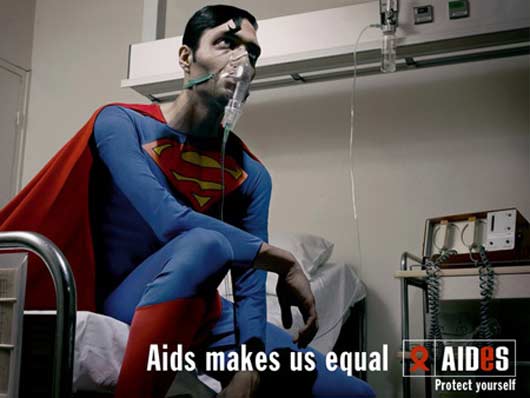
Today is World Aids Day. Like all such "days" the purpose is creating awareness about a specific social issue. Do you remember when people started to speak about AIDS in the 80s? I was still in elementary school when I first heard of the dreaded AIDS. Back then it was a "homosexual disease". I'm glad that we have passed such ignorance, but it is still far from appropriate to think the we (the world) have enlightened notions about AIDS.
In South Africa AIDS is still a rampant epidemic. For a long time I've heard that some African people believe that AIDS was invented by white people in an attempt to reduce their population. There are also superstitious beliefs that sex with a virgin will cure AIDS. While things have improved, South Africa has a history of presidents with questionable views regarding AIDS. There is the legacy of President Thabo Mbeki and of course the shocking example of the current president, Jacob Zuma, who took a shower after having unprotected sex with an HIV+ woman. Such examples nullifies years of sex and AIDS education. The real effects of this disease will be felt ten or twenty years from now when a great chunk of a whole generation in South Africa's will have died to AIDS-related deaths, leaving behind another generation of orphans.
In South Korea it is difficult to assess the affect of AIDS. As a far eastern country, saving face is an important part of the Korean culture, so statistics are often under reported. At least it is not considered a homosexual disease. It may, however, be considered a foreign English teachers' disease.
Friday, 22 October 2010
Giraffe Sex

"Giraffe Love" T-Shirt designed by Hank Green.
I've mentioned before that my post on Kakashi Hatake gets the most views on this blog and can only speculate that my recent post on the same manga character will probably be popular too. It is not that these post are anything special in and of themselves -- it is merely that the character Kakashi is so beloved and has such a vast fan base that anything related to Kakashi gets viewed a lot.
I thought long ago that a post with the keywords "Korea" and "Sex" would get much traffic, but this post is not nearly as popular as the Kakashi post. Another popular post, and one actually related to Korea and somewhat to sex -- or at least genitals -- is the one I wrote about the genetic differences between Caucasians and Asians (Koreans). Since I wrote it in July it has had over 2000 visitors to date, with about 20 visits a day.

Seeing what makes people end up on this extremely eclectic blog of mine intrigues me. I think there is a part of my graphic design and marketing (some of the stuff I studied) past-life that is still interested in how online marketing functions and how people end up on different websites.
Sex sells, we know that, but it is interesting that the blog post on Korea sex is less viewed than a fairly irrelevant personal account of a fictional animation character like Kakashi. My favourite giraffe video does not involve sex. Instead, it involves grief, which is a little like sex. In the video below are the five stages of grief (the word "grief" looks a little like the word "giraffe", doesn't it?) as acted out by a giraffe.
Now if you want to drive someone crazy, you could play them this giraffe song. I'm sure the average sane person will go nutters after listening to it repeated 10 times. I sure would. How many times can you listen to this song without going bonkers?
Now why did I write a post on giraffe sex again?
Wednesday, 29 September 2010
Girls' Generation, Prostitutes and Pygmalian
This music video of Girls' Generation reminds me of the first time I ventured into a red light district in Korea. It was during my first few months in Korea. I was in the Yongsan area -- I went to the digital market to get some computer gadgets. I decided to take a short cut down one alley on my way to another subway line. I didn't really take much notice of the mannequins in the windows. Then suddenly, from the corner of my eye I noticed that the mannequins moved. It nearly freaked me out, but I soon realised that these were not well dressed mannequins displaying boutique clothes, but in fact prostitutes displaying another type of merchandise. I remember being shocked at how beautiful these model-like women were; hence me originally assuming them to be mannequins. I've seen some beautiful mannequins in my life and can sympathise with Pygmalion. I've often wondered who sculpts clothing store mannequins and if they are cast from real models.
Saturday, 21 August 2010
Thailand -- Maikeedfai in Nakhon Ratchasima
The day after hour visit at the Thai Health Promotion Foundation, during my trip in Thailand, our group visited an educational group focused on young children called Maikeedfai in Nakhon Ratchasima, headed by Mr Kui (his Facebook-profile). Maikeedfai is one of many small programs that gets funding from the THPF. Maikeedfai helps to get young children involved in healthy after school activities. They explained that most Thai children just go home after school and sits in front of the television the whole day watching TV or playing video games. Basically Maikeedfai has an after school care centre that gets children out in nature or involved in fun, healthy, and education activities.


(I made the clay kitten and pony.)
After showing us some of the ways they keep children busy (like how to make bubbles, clay and other messy stuff) we departed to one of Maikeedfai’s other projects – Sex Education.

We went to a school where Maikeedfai had worked on Sex Education. One of the grades had prepared a play which they performed for us. The moral of the play was basically to wait, and if you have sex, to have it safely – use condoms. As is commonly known, the sex industry is lucrative in Thailand and children are tempted into it at an unfortunate young age. Part of the problem, we were told, are that parents do not educate their children on sex. A western man I spoke to who have lived in Thailand for about a decade told me that incest and molestation is also very prevalent in the rural areas, which just increases the problem of skewed perceptions of sex at a very early age among many Thai people – especially those coming from rural areas.


(I made the clay kitten and pony.)
After showing us some of the ways they keep children busy (like how to make bubbles, clay and other messy stuff) we departed to one of Maikeedfai’s other projects – Sex Education.

We went to a school where Maikeedfai had worked on Sex Education. One of the grades had prepared a play which they performed for us. The moral of the play was basically to wait, and if you have sex, to have it safely – use condoms. As is commonly known, the sex industry is lucrative in Thailand and children are tempted into it at an unfortunate young age. Part of the problem, we were told, are that parents do not educate their children on sex. A western man I spoke to who have lived in Thailand for about a decade told me that incest and molestation is also very prevalent in the rural areas, which just increases the problem of skewed perceptions of sex at a very early age among many Thai people – especially those coming from rural areas.
Saturday, 5 June 2010
Gekneusde appelkose

Haar hare ruik na appelkose. Soet, vars appelkose. Ek lê met my gesig in haar hare; ek omhels haar van agter. Haar lieflike heupe kruin in my buik asof ek ’n moeder en sy my ongebore kind is en so wil ek verewig lê. Haar asemhaling is rustig nes ’n laaggety. Slaap sy altyd so rustig? Dis oggend maar ek durf nie roer nie. Netnou word sy wakker, staan sy op, begin die dag, die res van die lewe, en het hierdie oomblik aanbeweeg. Aanbeweeg soos gisteraand toe ek haar gekneusde appelkose met al vyf sintuie geproe het.
Monday, 31 May 2010
Gedig

A Creative Commons image by RickHarris
Op persketakke lê soos watte die voorvrugte.
Só, op my hart blom my liefde – onverdun.
My beminde, hou nie jou rooi hart gegrendel nie:
die hart is ’n papie wat eens nog moet vlerke kry,
wat oop moet maak soos biddende hande na gebed,
soos ’n lotus voor die son, soos twee pare lippe
vir mekaar, soos bene vir bekende heupe,
soos vriende se kaalpersoonlikhede.
Want in die laat winter bot die perskes
en deur die koue groei die liefde soos tienerborste.
My beminde, hou nie jou soet mond toe nie:
laat my tong soos ’n vinger jou snare stram,
jou perkussie plekke kielie, jou diep liefdesgrotte
maak eggo soos roepende katedraalklokke,
wat luidkeels ween oor die hoog gestookte liefde
en jou brandstapel waarop ek hartstogtelik verteer.
Hoogsomer dra die perskebome swaar aan vrugte
en loop die harte oor van bloed en liefde.
My beminde, vergeet nie die ou verhale nie:
van Adam (óf Romeo) wat deel aan die giftige perskes
en deel aan die lot, want die liefde se drif vrees nie
die dood nie, dit loop doelgerig die duisternis in –
braaf soos Christus, wánt, my beminde,
die slot van die dood bind nie die liefde nie.
Saturday, 10 April 2010
Essays on Gender Issues

[Image Source: Mister V]
In my essay reading class, we have been reading essays focusing on gender issues the last couple of weeks. We started with the “Declaration of Rights and Sentiments” by Elizabeth Cady Stanton. The declaration was part of the first US women’s rights convention in 1848 and was signed by 68 women and 32 men. It is believed that the document was a pillar contribution for the women’s right movement in America. “Declaration of Rights and Sentiments” is basically a rewriting of the "American Declaration of Independence," with the uppression of the American states by the King of England’s substituted with the suppression of women by men.
Our second reading was a transcription of Sojourner Truth’s amiable and extemporaneous speech “And Aint’ I a Woman?” at a women convention in 1851, in which she refutes the claims of many previous (male) speakers. She persuasively rebuts arguments that women are by and large dependent and weak, or that women should have less rights on account of less intelligence (!) or because Jesus was a man. It is very likely that this famous speech commonly excepted as the standard version is not a direct transcription; actually it is a revised version published by Frances Gage in the 1860s. Nonetheless, every time I read it, and I’ve done so quite a number of times, I’m impressed anew by the charm and eloquence of it.
We followed these two examples of women’s rights texts from America with an article in two parts (Women in Korea 1; Women in Korea 2) written by Mathias Specht for the Korea Times daily paper. From his view as an outsider (i.e. non-Korean) who has lived in Korea as a student at one of Korea’s Ivy League universities,Yonsei University, Specht discusses what he considers the serious inequality of the sexes in Korea. Specht opens his article with an anecdote of an old Korean man accosting two young women and slapping the one for smoking in public. With this emphatic anecdote, Specht sets the tone for the rest of the article in which the injustices against Korean women is rolled out.
To transition towards a focus on men, we read Maxine Hong Kingston’s narrative “On Discovery” in which a man named Tang Ao is captured by women in the “Land of Women” where they slowly, and through torturous “care,” turns him into a woman. While the story of Tang Ao is quite short, it covers quite a number of themes related to gender issues, such as sex roles, sexism, nature vs. nurture, and questions on identity.
Our last reading on the topic of gender issues was Gretel Ehrlich’s “About Men.” The essay concerns the “cowboys” and “ranchers” of America’s West, particularly Wyoming. Ehrlich begins by contrasting these men, the real cowboys, with the romanticized icons often portrayed in the media. She then sets out to show the androgynous nature of cowboys—how they are both hard and masculine, but also tender and maternal, a dichotomy she plays out successfully throughout the essay. The essay concludes with: “…their strength is also a softness, their toughness, a rare delicacy.” Upon concluding our series on gender issues with “About Men” in which the aloofness of the hardened cowboy is deconstructed to show that they are both manly “hunters” and womanly “nurturers,” I put before my students the following question: “What makes a man?” or “How can one define masculinity?” The question is in part a personal question that I have contemplated before. (See my post: "When Does Manhood Happen?")
There is one other essay I would have liked to cover. It is an article that has been listed here on this blog under the “Web Pages I Fully Intend to Read One of These Uncertain Days”-tag, “Where Have All the Real Men Gone?” by Kathleen Parker. Well, after more than a year, maybe two, I at last got round to reading it. The essay argues that “feminism has neutered men and deprived them of their noble, protective role in society,” and is well worth reading. Unfortunately it is just a tad too long to include in my class as this coming week is the last week before the midterm exams. If I’m still here next year, I may very well adjust the syllabus and include this essay. I would've also liked to include something by African-American James Baldwin, whom was a essayist focussing on issues relating to sexual identity and race.
I must say that I take great pleasure in this class, and quite enjoyed the topic of gender issues that we’ve considered. I hope that the students enjoyed it similarly.
Next week we will take a look at Virginia Woolf’s short essay “Death of a Moth,” which will be our final essay before the midterm exams the following week.
Thursday, 8 April 2010
Prostitusie: 'n Paar interesante feite

Glo is die gemiddelde prys vir 'n sessie met 'n prostituut in Suid-Afrika 'n skamele $1. Wat is dit, om-en-by R7? Indien die gemiddelde prys R7 is, beteken dit daar sowaar prostitute is wat vir minder as dit dienste lewer; byvoorbeeld vir R5 of R2. Hoe arm en desperaat moet 'n mens wees om seks aan te bied vir so 'n klein bedraggie geld waarmee jy skaars 'n brood kan koop?! Ek ken iemand wat as 'n sekswerker haar drie kinders deur die skool gesit het. Sy het duidelik in 'n ander inkomste klas haarself bemark.
'n Koreaanse vriend het my onlangs vertel dat Suid-Afrika is besig om prostitute in te voer na Suid-Afrika vir die sokkerwêreldbeker. Ek weet nie hoeveel waarheid daarin steek nie, maar glo het hy dit op die nuus hier verneem. Dit klink vir my of hierdie sokkerwêreldbekers maar net 'n groot verskoning is vir massa-dekadensie. Dwelms, seks, drank, en oorlog op die sportveld.
'n Ander statistiek, hierdie slag rakende Korea, is dat 1 uit 5 Koreaanse mans betaal vir seks meer as vier keer per maand! Gesiene al die "Love Motels" waaroor ek al baie geskryf het, bevestig hierdie statistiek dit wat ek al lankal vermoed het. Dit is seker een van die goed wat my die meeste irriteer van Korea -- hierdie skynheiligheid. Hulle maak asof die familie-eenheid die belangrikste ding op aarde is, en asof Koreane oor die algemeen baie preuts is, maar oral is daar motelle, die advertensiebedryf stoom van seksuele innuendo, en elke vyfde ou op straat besoek 'n sekswerker een keer per week.
Jy kan die statistieke hier groter sien.
Tuesday, 16 March 2010
Seks vir plesier
Van alle onwaarskynlike plekke het ek het op hierdie Afrikaanse elektro-pop liedjie afgekom op 'n blog wat fokus op Koreaanse musiek! Die komponis is Will Mono en die vokalis is Jan Joknie. Die musiekvideo vir "Seks vir plesier" neig aan grillerig, maar die song is nie te sleg nie.
Ek het tot 'n skokkende insig gekom; alhoewel ek nie van tipiese pop-musiek hou nie, geniet ek wel goeie elektro-pop, byvoorbeeld die Japanese groep Sakanaction waaroor ek al voorheen 'n inskrywing gemaak het. Sedert ek verlede Oktober Sakanaction se album "Shinshiro" gekoop het, luister ek nog redelik gereeld daarna. En dis seker ook onnodig (en jammer) om te sê dat Sakanaction se musiek aansienlik beter is as Will Mono en Jan Joknie se "Seks vir plesier". Die song is nie heeltemal sleg nie, maar ek stem glad nie saam met Musical Alliance Pact wat dit beskryf as "catchy electro genius" nie. "Seks vir plesier" is okay, maar dis nog nie geniaal nie.
Ek het tot 'n skokkende insig gekom; alhoewel ek nie van tipiese pop-musiek hou nie, geniet ek wel goeie elektro-pop, byvoorbeeld die Japanese groep Sakanaction waaroor ek al voorheen 'n inskrywing gemaak het. Sedert ek verlede Oktober Sakanaction se album "Shinshiro" gekoop het, luister ek nog redelik gereeld daarna. En dis seker ook onnodig (en jammer) om te sê dat Sakanaction se musiek aansienlik beter is as Will Mono en Jan Joknie se "Seks vir plesier". Die song is nie heeltemal sleg nie, maar ek stem glad nie saam met Musical Alliance Pact wat dit beskryf as "catchy electro genius" nie. "Seks vir plesier" is okay, maar dis nog nie geniaal nie.
Sunday, 14 March 2010
Subscribe to:
Posts (Atom)