Showing posts with label religion. Show all posts

Wednesday, 26 July 2017

Mmm...

"God is Christlike and there is no unchristlikeness in God." -- Archbishop Michale Ramsey

Sometimes it is good to read a paraphrase to truly comprehend an idea. This quote by Archbishop Ramsey combines ideas from different verses:


  • 1 John 1:5, "God is light and in him is no darkness at all." 
  • Colossians 1:15a,  "Christ is the visible image of the invisible God..."
  • Hebrews 1:1-3a, "In the past, God spoke to our ancestors through the prophets at many times and in various ways, but in these last days he has spoken to us by his Son, whom he appointed heir of all things, and through whom also he made the universe. The Son is the radiance of God’s glory and the exact representation [χαρακτήρ / charaktēr] of his being [ὑπόστασις / hupostasis, i.e. "essence"], sustaining all things by his powerful word."

When Christians really accept the idea that the character of God is exactly the same as the character of Christ, especially as seen at the Cross, it will mess up some of their most cherished dogmas. For instance, the Jesus at the Cross depicts a non-violent, non-retaliatory, all-forgiving, non-judgemental, unselfish, other-centered, unconditionally loving character. Now that is a type of God that will make many people very uncomfortable. 

Saturday, 3 June 2017

Take Your Pick: God of Love or Mafia Boss

If God is supposedly good and almighty, why is there so much pain and suffering in the world? Or as a loved-one recently put it, what use is a God that lets such atrocities happen? This is the paradox that religions have struggled with for millennia and continue to contemplate. In theology, it is known as the Problem of Evil.

My favourite atheist Kurt Vonnegut provides a poignant solution: “There is no good reason good can’t triumph over evil, if only angels will get organized along the lines of the mafia.” I think Vonnegut, unlike most people who use the Problem of Evil to argue against the existence of (a benevolent) God, intuitively understood the impasse. As ethicist David Rodin puts it: “if one can defeat evil only by becoming evil, then it is impossible to defeat evil.” Sure, an almighty God can easily kill the evil-doers, or better yet, reach into the minds of the wicked and prevent them from acting out their malicious intentions, but while the end may justify the means the implication is horrifying. God would be the Mafia Boss, the Tyrannical Dictator, the ultimate Puppet Master. Yes, we would not have evil or pain or suffering, but neither would we be free to enjoy anything worth caring about. We’d simply be puppets in a universe void of love or liberty.

Sunday, 15 May 2016

Mmm

“It is customary to blame secular science and anti-religious philosophy for the eclipse of religion in modern society. It would be more honest to blame religion for its own defeats. Religion declined not because it was refuted, but because it became irrelevant, dull, oppressive, insipid. When faith is completely replaced by creed, worship by discipline, love by habit; when the crisis of today is ignored because of the splendor of the past; when faith becomes an heirloom rather than a living fountain; when religion speaks only in the name of authority rather than with the voice of compassion—its message becomes meaningless.” — Rabbi Abraham Heschel, God In Search of Man

Saturday, 31 May 2014

HeartSong's "A Might Fortress Is Our God"

Three years ago I mentioned that one of my favourite hymns are Martin Luther's "Ein feste Burg ist unser Gott". This has not changed, and with every new rendition of the song I appreciate it afresh. The best modern version I've heard recently is undoubtedly the one by the CCM band HeartSong.


Saturday, 1 March 2014

Some of the stuff I did in February

So here are a couple of the things I did in February.

Jaehyuk

Kim Jaehyuk and me
My friend Jaehyuk and I hadn't had an opportunity to hangout in a year. When I realized that a year has passed, I called him up and told him it is high time to get together. It is not that we are not in contact -- we occasionally chat on KakaoTalk and are KakaoStory friends, so we are up to date with each other's activities. However, it was just nice to sit in each other's auras again. (Something that electronic communication cannot offer.) With our mutual schedules so full, we decided to make appointments about every other month, long in advance.


Jaehyuk, who is Mr Korea 2013 and went on to represent Korea at the Mr International pageant in Indonesia last year, and I met during a martial art photo shoot some time back.

Seoul Art Center & Myung-Il's Play


When I lived in Korea the first time, one of my favourite places to go to were the Seoul Arts Center. I especially enjoyed going there on Sabbath afternoons, as their is a beautiful little mountain just behind it with some short trails, and in the evening there is a music fountain, or other enjoyable activities to do on a Saturday night. Unfortunately I don't live close to it anymore, so I seldom visit it these days. However, my friend Myung-Il, who is a theater director recently had her production "The Closed Door" there, so it was wonderful to go there again and reminiscent about the "good old days". Myung-Il's play was probably one of the best in her ouvre I've seen so far. I'm also starting to notice some recurring motifs, so I'm starting to think about writing an article on her work sometime.

Road FC


Since the gym I'm associated with also practise amateur MMA we sometimes attend MMA competitions. Road FC is a touring pro MMA championships in Korea -- it was a nice evening, although the fights were a little dreary at times. Luckily my friend John joined us so we had great conversations through the boring parts.

Friends' Graduation

Dr John, me, and Dr Leo

Speaking of John, he and Leo, another close friend, graduated recently--both getting their PhD degrees. It was nice to attend the ceremony and get a taste for what will hopefully also be my achievement this time next year.

Temple Stay


An interesting cultural experience was staying overnight at a Buddhist temple and partaking in the religious services. Their was much of the experience that I enjoyed and many things about Buddhism that I found appealing, but the experience also confirmed some ideas I had about the basic Buddhist worldview that I am at odds with. It is a religion that I can appreciate, but not one I can fully embrace.

Community Supported Agriculture


I decided to join a CSA-group here in Korea, which provide me with fresh, organic (i.e. non-GMO) produce from local farms once a week. I ordered a sample package (picture above) and after thinking about it, decided to join as of this (March) month, so from next week I will be getting my weekly supply of fresh organic food. Here is an explanation of CSA:

CSA, Community Supported Agriculture, is a mutually supportive relationship between producers and consumers where farmers are able to have a reliable market for a variety of products and the community is able to attain fresh organic produce from responsible local farmers. Consumers pay for a specific time’s worth in advance and every week, or every other week, a box of fresh in-season produce is sent to the consumer’s doorstep directly from the farm. This lump sum payment provides the necessary capital and safety for the farmer to successfully grow his/her crops and in turn the farmer provides the consumers with trustworthy, fresh organic food. While both producer and consumer may share and reap the benefits of a successful harvest, they also share the risks that are undertaken while farming.

See some pro's and con's of CSA here. CSA are also part of a greater WWOOF-network, something I'm thinking about -- even as a form of holiday. As a tourist, I'm not really into the typical touristy places. Instead, I like to see how the locals live and get my hands dirty with local activities. This I find to be a much better cultural experience that just going to tourist sights (although I may do that too). One way of getting involved with the "locals" in a country, and actually living with them and interacting directly is to go work on a farm. Here is how it works.

Movies


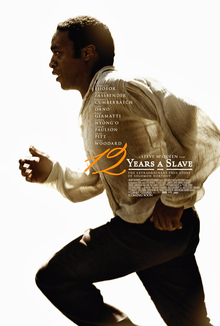
During January and February I saw a number of movies. The Wolf of Wall Street and American Hustle are both really good films, but I found them disturbing. With both, after seeing them, I felt that this is exactly what is wrong with America (and the "West") today. Hedonistic greed. Speaking of problems in America, Dallas Buyer's Club was very touching with great performances. A story about HIV/AIDS and pharmaceutical companies' hording of medicine. (Greed again.) The most recent movie I saw, and the one that probably touched me the most was 12 Years a Slave. I came out of the cinema with an awful feeling in my stomach, as if I have just been given the news of a death in my family. It is not an easy film to watch, but it is a superb film. I force myself to watch these things, to remind myself of the evils man are capable of and hopefully be inspired to be a better person -- daily.


The new Robocop was a pretty good remake of the sci-fi action movie of my childhood. Similar to the remake of Total Recall, I found the new Robocop to be close enough to the original, but inventive enough for a new audience used to superb special effects and CGI. It didn't disappoint. I also watched some children's animated films. I strongly discourage anyone to see the new Tarzan movie. While the CGI was brilliant, I found the story to be quite poor and highly sexist. These gender stereotypes are not the values you want to teach your children. On the other hand, Disney's Frozen. It was beautiful on many levels and did a great job at dispelling gender stereotypes. I saw it twice.


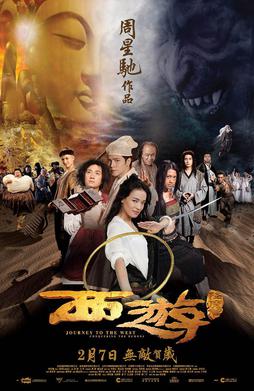
I also watched Stephen Chow's new Kung Fu comedy, Journey to the West: Conquering the Demons. Such fun!

Students' Poems


After quite some time of editing, I finally got my students' poems published. Download the ebook for free here.

Wednesday, 20 March 2013

Which Francis?

Image Source
The new Bishop of Rome has chosen the name Pope Francis I. Most commentators assumes that he chose this name in honour of St Francis of Assisi, but I am doubtful. The new Pope is a member of the Jesuit Order founded by Ignatius of Loyola. In the early Jesuit Order there were six prominent figures, one of them was Francis Xavier, a co-founder of the Jesuit Order, and later to be canonized as Saint Francis Xavier. If the new Pope was going to name himself after a Francis, it is more than likely after his Jesuit ancestor St Francis Xavier, someone from his own order, rather than St Francis of Assisi founder of the Franciscans, another order. The Jesuits are extremely loyal.

Does it matter whether he named himself after St Francis of Assisi or after St Francis Xavier? Well, anyone that knows a bit about the Jesuit Order will tell you that it surely does matter. We live in exciting times.

Then again, I may be wrong . . .

Saturday, 8 December 2012

Gay Marriage and the Separation of Church and State

Image Source


Gay marriage is a hot topic these days, in particular in the United States where the issue will be decided upon by the Supreme Court. So herewith, my two cents:

Personally I think this is a matter where there is confusion between the powers and authority of Church-and-State and that this issue is one that mixes Church-and-State. The United States was built on the idea of the Separation of Church and State, something I especially support. The history of mankind is full of examples of the evils that result when a proper distance between Church powers and State powers is not adhered to.

Why do I say this whole marriage controversy is a Separation of Church and State issye? I say so because there is confusion between the religiously sanctioned marriage covenant, and the state sanctioned civil union. See, in the past the clergy would announce something like this: “By the authority invested in me by God, I now pronounce you Husband and Wife.” The clergy has the authority to oversee a covenant between three parties: the couple towards each other, and the couple towards God. Their marriage is a covenant, a sacred promise, that they make to each other and to God. Somehow, this covenant became mixed up with a legal contract between partners that is enforced by law where a government official can declare: “By the authority invested in me by the State, I now pronounce you legally bound.” For some reason, the civil union became a “civil marriage” where the government official could “marry” couples and clergy could “legally bind” couples. It is this concept of a “civil marriage” which I disagree with because it brings together a legal contract (“civil union”) with a religious covenant (“marriage”) and pretends as if they are the same thing, which they are not. A civil union, which is a legal contract, is based on the authority of an earthly government, the State. While a marriage is based on the authority of a religious system, God. The two ought to stay separate functions.

How do I feel about homosexual marriages? Well, the same way I feel about heterosexual civil unions. They are two separate couplings (one being a legal contract and the other a religious covenant) that should or should not be obliged by the separate authorities that oversees such matters. You do not need one to have the other—i.e. you can get married during a religious ceremony or you can get a civil union by signing a legally binding contract, or you can do both. If you want to be legally bound to someone, then you should get a civil union. This is a legal contract between two parties and it doesn't differ in any way from any other legal contract between two parties, whether they are of a personal nature or a business nature. If you want to make a religious covenant with another person, then go to the religious authority that oversee and condone the type of covenant you wish to make, and if one sect (i.e. one denomination) doesn't condone your coupling, find one (another denomination) that does. And in truth, depending on your religion, you don't even need to have a clergy present. Two people can by themselves make a covenant between themselves and God—no clergy or government authority need to be involved—it is a matter of the heart.

In short: People, regardless of their sexuality that want to be legally bound to each other should sign a legal contract by getting a civil union. Similarly, people that want to make a religious promise of fidelity towards each other, should engage in a marriage covenant. Keep the Separation of Church and State by keeping these two matters distinct.

Read a thought provoking article by a gay man who is against gay marriage, here.

Sunday, 18 November 2012

A Weekend of Dance

I was lucky to receive a complimentary ticket through a friend of a friend to attend the annual Seoul Choreography Festival last night. The festival brings together the best dance choreographers in Korea for a dance competition that stretches a couple of days. The viewing I saw last night included two outstanding performances under the title "Blue Blood".

This morning (Sunday) I went to train in capoeira the Afro-Brazil fighting dance. I'm the organizer for a martial art group in Seoul that meets roughly every second Sunday to train in martial arts. I try to get as varied a selection of instructors as possible and this weekend we got to train with a great capoeria instructor from Jamaica. Capoeira requires lots of rhythm and part of the lesson we had this morning involved Afro-dance sequences to help us loosen up our bodies in order to move smoother during the "fights". It was lots of fun.


Then in the afternoon I went to the LG Arts Center again, this time to watch yet another dance performance. Jung Young-Doo, founder of the Doo Dance Theatre, choreographed probably one of the most beautiful performances I have ever seen. I truly feel that my soul was enriched from this performance. The production is called "Forethought: Prometheus's Fire". The ticket sales website reads: "Forethought - Prometheus Fire is an interesting reflection on Prometheus who stole fire from Zeus and gave it to mortals in Greek mythology. How has mankind interpreted and utilized this special gift? What have we lost and gained from it? Are we happier and liberated with the power? JUNG Young Doo will look into these questions exploring human evolution and civilization."

After the dance performance I quickly went to see a friend of mine who owns a lounge-disco in the area. On Sunday nights they have an informal church service, basically just a group of friends coming together to worship. Because I live rather far and had been away from home since 8am (and it was after 8pm already) I didn't stay for the whole service, just for the praise section. I was really impressed. I particularly liked the name of their "church", namely Sinner's Church. Here we have in the middle of Gangnam (yes the neighbourhood made famous by the infamous "Gangnam Style"-song) a small group of self-confessed sinners having worship in a nightclub. I liked the unpretentious, honesty of it all.  These are just friends, people that work or hang-out together, who also happen to want to share God together. It was a nice break from the formal church setup that has become the custom. The Sinner's Church is much more inline with the apostolic movement that Christ and the apostles established -- informal congregations that met in houses, rather than temples. If Sinner's Church had an English service, or if my Korean was better, I would definitely have joined them as one of the ways for me to "dance" with God.

Saturday, 4 August 2012

Thoughts on the "Christ in Majesty" Mosaic by Jan Henryk de Rosen


On a social network a friend linked to a photo of "Christ in Majesty", a beautiful mosaic in the main dome of the Basilica of the National Shrine of the Immaculate Conception in Washington D. C., which serves the Catholic University of America.

I was immediately fascinated when I saw the mosaic and its depiction of Christ, because it seems to be a contextual depiction. Contextual evangelism is an attempt to bring the gospel and theological doctrines to the people in a way that is coherent with their own cultural context. Here we have a very European looking Christ, for a mostly European descendent audience. But I soon realised that my conclusion that this is a case of contextualization is wrong, because we find in this mosaic elements that are Oriental, rather than Occidental. 

A close-up of the face of the "Christ in Majesty"
mosaic. (Image Source)

Russian born
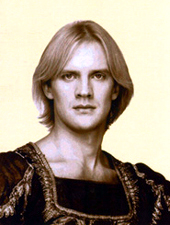
Alexander Godunov, a
North Eastern "Nordic",
with typical Aryan features.
But let's first look at the Occidental, i.e. European elements. The Christ looks Aryan, with Nordic features: blond hair, fair skin, light (blue or green) eyes, a long headed face with fine features and slender build. The speculative Aryan race are a supposedly superior people and depending on the tradition may have been the inhabitants of the mythical Atlantis. The Nazis seemed to have believed in Nordic-Atlanteans, and a book Der Nordische Gedanke unter den Deutschen ("The Nordic Thought and the German") by Hans F. K. Günther possibly became the inspiration for later eugenic activities. I find it fascinating that the artist of this mosaic, Jan Henryk de Rosen, should choose to depict Christ in this fashion. 

Jan Henryk de Rosen
(Image Source)
De Rosen was Polish, from a Jewish family that converted to Calvinism. Himself later converted to Catholicism. As an artist he worked primarily on religious themes. Being forced to take refuge in America when the Nazis persecuted Jews in Europe, I find it curious that he should depict Jesus in the ideal that the Nazi's used to persecute his people. At first I thought that maybe he only depicted Jesus in this idealistic European fashion as an contextualization attempt for the predominantly European descendant audience of Washington D. C., but this particular mosaic was not the only time that De Rosen depicted an "Aryan" Christ. 

A Christ Icon by Jan Henryk de Rosen
on display at the
Ukrainian Museumand Library of Stamfort
in Connecticut. 
There are other interesting things about the "Christ in Majesty" mosaic. Let's take a look at the halo. 

Notice the cruciform halo with the three
branches of fire. (Image Source)
Image Source
The halo, a circle of light around a person's head, is a common element in iconic art to indicate holiness. The cruciform halo is a variation of the halo embedded with a cross and is generally used exclusively to depict Jesus. The cruciform halo in the "Christ in Majesty" mosaic above shows a burning cross, which is very unusual. It is not a version of the cruciform halo of Christ icons that I have seen before. I cannot help to think of the burning crosses used by the Klu Klux Klan who also based their ideology on "Nordic Thought" and believe in Aryan supremacy. Yet the burning cross need not be an allusion to the KKK's cross burning, it could have an Oriental connection.

A mosaic of Apollo with beams of light
emanating from his halo, from the 2nd
century, Tunisia. (Image Source)
A Greco-Roman depiction
of the head of Apollo from
the 4th century.
(Image Source)
Notice the similarities in the
hair of this sculpture and the
hair in De Rosen's depiction
of Christ. 
The Greco-Roman sun god Helios (or Apollo) was often depicted with beams of light emanating from his halo (see above).

The Grecian god of light and the sun, Apollo, was often depicted as a beautiful youth, quite similar in likeness to the Jan Henryk de Rosen's depiction of Christ (albeit beardless). In paintings (on pots) and mosaics Apollo is usually attributed with beams of light emanating from his halo, as already mentioned. What I haven't seen illustrated are beams of fire, such as those we see in De Rosen's mosaic. There is however other religious traditions outside of the Western tradition where aureola are shown as flames. An aureola is an expansion of the halo around the figures whole body; i.e. an aura visible as a "golden glow" of holiness. In art from particularly Indo-Persion and Far Eastern traditions we find fiery aureolas.

Vairocana Buddha
(Image Source)
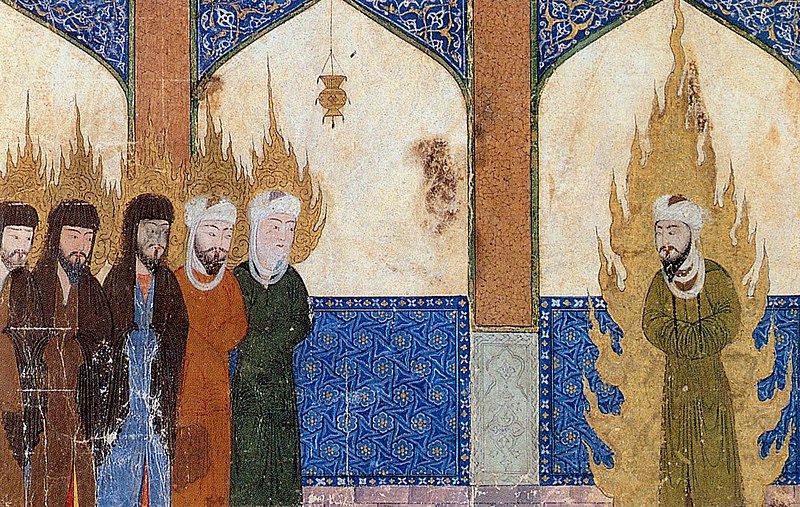
For instance the Vairocana Buddha is usually pictured with flames of radiance surrounding him. (Interestingly, the Japanese term for the Vairocana Buddha is Dainichi, a name used by Christian missionaries in Japan (Francis Xavier) for the Christian God, because Dainichi sounds similar to Deusu, Spanish for God.) Deities with fiery aureolas are evident in Hinduism, Jaism, Zoroastrianism and even Islam (see a picture of Mohammed with a flaming aureola). The flames, of course, are not wholly foreign to Christianity, for the Bible describes God as "a consuming fire" (Exodus 24:17, Deuteronomy 4:24, Hebrews 12:29.)

Buddhist Monk in monastic robes with one
shoulder bare, sitting with legs crossed.
(Image Source)
One of the most curious elements to me of De Rosen's depiction of Christ is his attire and seated position. 

Compare the colour of the robes, the bared
shoulder and cross-legged seated
position with that of the Buddhist monk.
(Image Source)

The similarities between the De Rosen's styling of the robe, colour of the robe, and seating of the figure to that found in Buddhism is striking.

(Image Source)
Keep in mind that this mosaic depicts the "Christ in Majesty". That is, when Christ sits on the throne of God as ruler over everything, an icon that is usually part of the Last Judgement scene. The "Christ in Majesty" scene is a well established scene in Christian iconography, but what we nearly always see in these "Christ in Majesty" icons is a Christ sitting with his legs bent at the knee and hanging down in front of him, as he sits on the throne, as we can see in the picture on the side. I've never seen the "Christ in Majesty" (or to be frank, any Christ icon) depicted in this meditative position that is the customary depiction in Buddhist iconography.

The colour of the robe is also reminiscent of Buddhist monastic dress: Theravada Buddhist monks dress in a saturated orange robe; Tibetan Buddhists dress in crimson coloured robes. The red colour of the robe in De Rosen's "Christ in Majesty" does have Biblical foundation, as the Christ of Judgement is described in the Book of Revelation as "clothed with a vesture dipped in blood . . ." (Revelation 19:13), but the garment dipped in blood is part of another Biblical image, that of Christ sitting on a white horse (Revelation 19:11), and not of Christ seated on the throne.


Jan Henryk de Rosen's "Christ in Majesty" mosaic is a beautiful piece of work, but also an enigmatic one. One I do not completely comprehend. The cruciform halo in the form of a burning cross is quite strange. For me it reminds me of Oriental auroras or KKK burning crosses. Depictions of Christ as Caucasian are nothing new in Western Christian art, but this one seems especially Nordic, yet it was created by a Jew who ought to be in disagreement with "Nordic Thought". Then there is the curious Buddhist robe and meditative cross-legged position, which is almost certainly an allusion to the seated Buddha of Buddhist iconography.

The postmodernist in me wants to exclaim that this is obviously a post-modernist artwork, but that to me feels like a cop-out solution. While it is true that the the basilica was indeed completed within the postmodern zeitgeist, I'm not convinced that saying the enigmas in this mosaic can merely be explained away by envoking postmodernism's a-little-bit-of-this-a-little-bit-of-that characteristic. Iconography are always embedded with symbolic meaning, this is true even for postmodern iconography.

I'm sure I will continue to think about this mosaic for some time still.

(You can read an interpretation of this artwork here, by a Catholic source.)


Friday, 13 July 2012

The Group

I try to think the best of people. I'm sad to admit that it is not always easy and not something I have always done with a fair amount of consistency, but I'm glad that I'm improving. As Joyce Meyer is fond of saying: "I'm not where I ought to be, but thank God I'm not where I used to be!" So at an interpersonal level I can say that I'm not really a judgemental type of person. I try to accept people for who they are regardless of their religions, creeds, and what not. It is, I think, partly this reason why I have so many diverse friends, ranging from atheists to religious folks; from Catholics to Protestants to followers of Islam or Wicca or Buddhism; from artists to mechanical engineers to philosophers to artisans. 


Yet while I can love diverse individuals, I often find myself much less optimistic of humanity as a whole, and of political powers in particular. I see humanity as innately selfish, and politicians (as the figureheads of groups) as inherently power-hungry mongrels that ought to be distrusted. There is therefore a peculiar paradox at play: individual humans I accept, but groups of humans banded together I mistrust. 


Why exactly this is the case I do not know, but it is a motif that I recognise in myself as something that is taken over into various contexts. I enjoy individual sports, but not group sports. I enjoy intimate social moments with friends (one, two, three people), but am not very fond of big parties. I value individuality and praise people that dare stand out from the crowd, but am disappointment with all the "sheeple" that just follow the popular streams. 


My distaste in the "group" may have started very early. I remember for example instances when I was still at school and having very civil and pleasant one-on-one conversations with a fellow schoolmate, just to have this person turn into a bully when in a group -- a type of menacing wolf-pack mentality that brings out the worst in a person. Think of football hooligans who are often separately nice individuals, but turn into crazed bastards when they are part of the mob. For similar reasons I distrusts fraternities, political parties, religious groups, and so on. Any congregation that creates a homogeneous entity where the individual is assimilated into the group and the group becomes the new grand organism makes me feel uneasy.


Yet, with all my aversion to the group, I know that the group is not all evil. Sometimes groups are good: People do sometimes come together for a shared altruistic goal. I love music and music is often the result of people working as a group together. It is of course significant that I should especially love jazz music, where the individual musicians never give up their individuality, nevertheless, there are positive groups, of which music and the arts abound. I know of groups of people that raise money for charity, to build houses for the poor, or schools or hospitals. Spontaneous groups of people that come together in times of crisis to help one another. 


What should be the difference in these altruistic groups, and those other groups? In part, I guess, it is the we-against-them attitude that so often occur with a group. What makes a group a group is that the group-members should share something, some identifiable trade. Something that makes the group different from people that are not part of the group. This focus on difference is often the cause for the antagonism against anything that is not the same. The magic of an altruistic group seems to be an outward focus, rather than an inward focus. A group that comes together to build a school in a rural community is not focussed on themselves and what makes them unique, but is outward focussed. Their goal is altruistically other-focussed. Unfortunately my disapproval of groups is based on the fact that there really are so few altruistically other-focussed groups. Most groups are formed with an inward focussed attitude and selfish goals.


As an outsider living in a group-oriented society like I do (here in Korea), one gets to perceive the interesting nature of groups. One get to see the ugliness of groups, but also the encouraging characteristics of groups. Like is often the case in real life, groups are not all evil or all good. I often say that I have a love-hate relationship with Korea, I guess in part because there are aspects of Korean culture and society that often irks me up the wrong way, but then there are other aspects of the culture that is heart warming to see and experience. 


Although it will still take a very long time before I get over my near reflexive distrust of the group, I am slowly learning to accept that groups can be forces of good, that groups are not necessarily always the sandboxes of devils. The spirit of a group may very well be guided by angels, by altruistic principles, too.

Monday, 4 June 2012

Things I Didn't Tell You About

This blog is supposed to function for me as a type of diary but there are so many things I haven't told you about. For instance:


I discovered a quaint little jazz club which I went to last week. Because of it's small size it has a very intimate feel to it and the music is too loud as is often the case in the bigger clubs. It has a cute French name: "La Cle", which means "The [Musical] Key".


The week before I went to another jazz bar that I had once seen while passing in a bus called Tokyo Jazz. Unfortunately the live performance started rather late (21:30) and I had already bought a movie ticket for later. I'll definitely have to go back there some day and get a feeling for their live performances.

Image Source

Yesterday I went to a jiu-jitsu tournament. It was surprisingly boring. Maybe the action and technical expertise improved later in the day, but by around 15:30 I left to meet up with my Taekwon-Do instructor.


There was this one guy standing in the back somewhere without his shirt on and at one time he did this Michaelangelo's David-pose that I just had to get a picture of.


One thing about Brazilian Jiu-Jitsu, it gives you nice abs.


Last Monday was Buddha's Birthday, a national holiday ion Korea. I decided this year to use this period to get to know more about Korean Buddhism, so the week before I went to a seminar on the benefits of Seon Meditaion. "Seon" is the Korean word for "Zen".


And on Buddha's Birthday I went on a tour of some of the major Buddhist temples and sights in Seoul.


There were many great photo opportunities and I also got to take some videos of some dance performances done by some of the Buddhist monks (and nuns) in their celebrations.


Two weeks ago two students, Jen and Taewon, from the ITF dojang where I am involved tested for their first degree black belts. I've been very involved with especially Taewon's training and do feel a sense of pride in their accomplishments.


About three weeks ago I visited a Korean friend of mine in her hometown, in Heongseong. She, her husband, and I went on an easy, yet beautiful mountain hike in the area. We also got to catch up a bit. It had been about a year since we had spend any time together.


It was nice to see the farm we she grew up again. The picture above is of the house she lived in as a child. Her parents still live on the farm, but they had build themselves a more modern country house in the meantime.


Two Fridays ago I went to a Taekkyeon demonstration. The photo above shows some of the traditional ("farm") musicians getting ready. Taekkyeon is a traditional Korean folk martial art that is usually accompanied with traditional folk music. I miss Taekkyeon. I've suspended my Taekkyeon training a year ago because of time constraints and in order to save money for familial matters.


In April I hosted a Jeet Kune Do workshop. The guest instructor was Dr. Zee, somewhat of a self-made Jeet Kune Do celebrity and also an accomplished Oriental Medicine doctor.

I also travelled to Chuncheon with a friend visiting from Egypt in April. It was memorable.


Also in April I went to a theatre production of a friend of mine. She was both the writer and director of the play called "The Bag". She used different bags (backpacks, handbags, briefcases, etc.) to symbolize the emotional things people carry with them: their past, their burdens, their hopes and dreams. Although the play was completely in Korean and I could therefore only understand it in part, I still enjoyed it a lot. The lighting and choreography was brilliant and the acting very engaging.

This past weekend I had to go to our department's freshmen camp. The freshmen departed for the camp on Thursday already and stayed until Sunday -- us faculty only had to go for Friday evening until Saturday afternoon. Usually I have to share a room with another faculty member, but this time we all had our own rooms, and what a room it was! A big bed, with a widescreen TV and a bathroom with a jacuzzi!

There are probably many other things I've done which I cannot remember now, such as movies I had watched. Mirror Mirror is not worth wasting your money on. Snow White and the Huntsman is. Julia Robberts' rendition of a disturbed wicked stepmother / witch sucks; Charlize Theron's is exquisite.